

Pick the right tree first
For a shade tree that shrugs off clay, heat and drought: live oak, Shumard red oak, chinquapin oak, bur oak, cedar elm, Chinese pistache, and bald cypress where it is wetter. For something smaller with color: crape myrtle, redbud, Mexican plum, desert willow, vitex, yaupon holly. Skip the ones that struggle in alkaline clay — pin oak, sweetgum, silver maple, most magnolias — unless you enjoy chelated iron. The Plant Finder lists all of them with mature sizes. Call 811 before you dig.
Container vs. balled-and-burlap
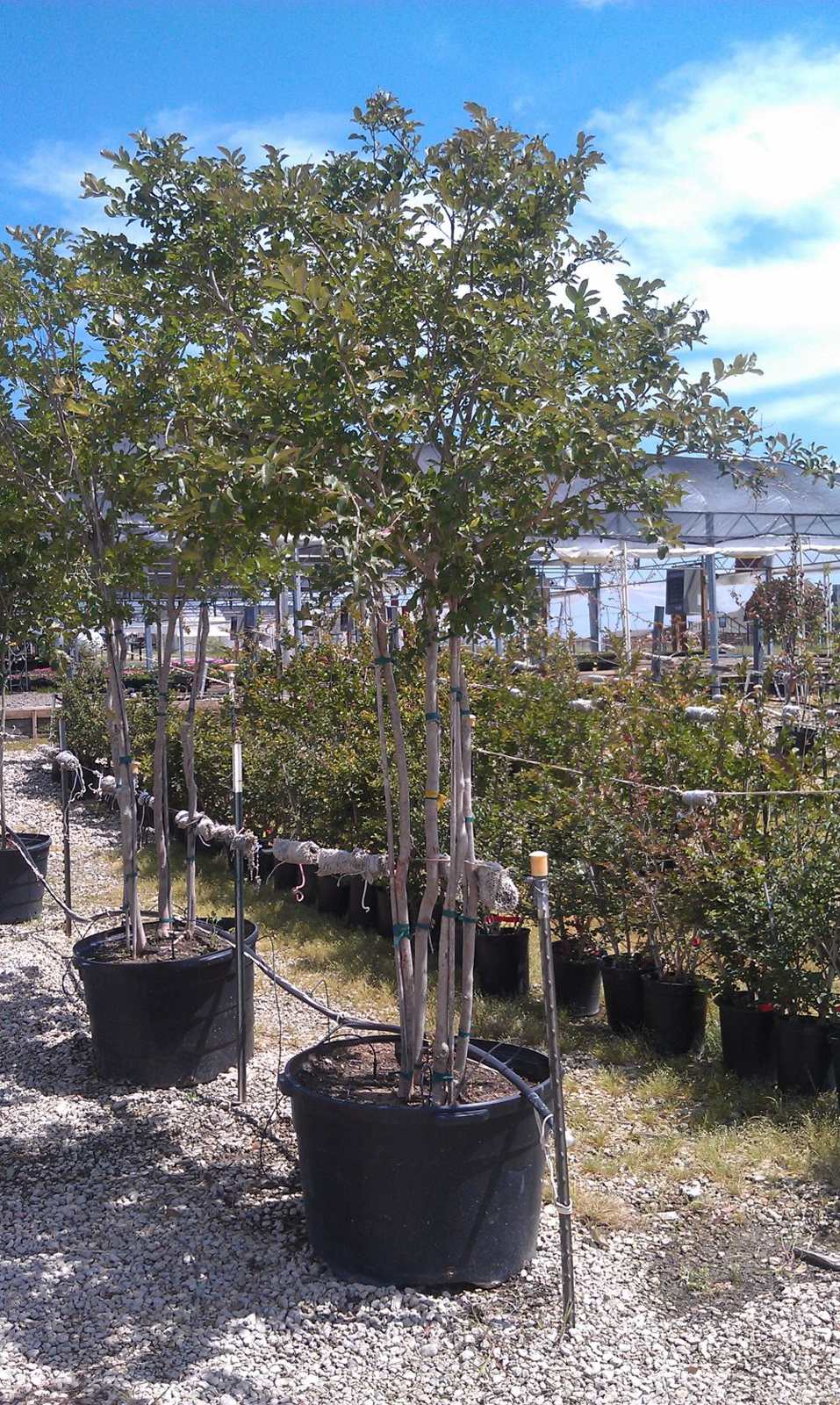
Container trees (5 to 200 gallons) can be planted any month with proper watering. Balled-and-burlap trees, dug from the field with a soil ball, are best planted from November through March while dormant. Either way, bigger is not always better — a 30-gallon tree usually catches up to a 100-gallon tree within a few years, because it establishes faster.
Step by step
- Find the root flare. Scrape the top of the root ball until you see where the trunk widens into the roots. In containers it is often buried an inch or two. That flare must end up at or slightly above ground level.
- Dig wide, not deep. Two to three times the width of the root ball, but only as deep as the distance from the flare to the bottom of the ball. In clay, roughen the sides of the hole with the shovel so it is not a slick bowl.
- Loosen circling roots. Cut or tease apart any roots wrapping the outside of a container root ball. For balled-and-burlap, remove the wire basket and pull the burlap and twine at least off the top third.
- Set it and check the height. Lay a shovel handle across the hole: the flare should be at or an inch above it. Too high is fixable; too low is fatal.
- Backfill with the native soil. No compost or amendments in the hole — a rich hole in clay becomes a bathtub and the roots refuse to leave it. Break up clods, fill halfway, water to settle, fill the rest.
- Water in deeply — a slow hose at the trunk until the whole hole is soaked.
- Mulch 3 inches deep in a ring out to the drip line, pulled back a couple of inches from the trunk. No mulch volcanoes.
- Stake only if needed. If the tree stands on its own, leave it; trunks that move a little grow stronger. If you must stake, use wide straps, leave slack, and remove them within a year.
The first year
About 10 gallons per inch of trunk diameter every week, applied slowly to the root ball, spring through fall of the first year (see the watering guide). Do not fertilize at planting; a light feeding the following spring is plenty. Do not prune except to remove broken branches. A slight droop in the first summer is normal; leaf scorch on the edges usually means water, not disease.
Delivery and planting
Need a big tree brought out? Call to ask about our delivery options. If you would rather not dig, we can recommend a contractor — ask at the counter.
Written by the Nursery Professionals at Landscape Source Nursery, 167 Ole West Lane, Rockwall. Questions? Call (469) 698-0037 or send us a note.