


What you are dealing with
Blackland clay swells when wet and shrinks when dry — the cracks you see in August are the same reason foundations move. Roots need both water and air, and saturated clay has no air in it; that is why so many new plants drown here in a wet spring. On the plus side it is rich in nutrients and holds water well once plants are established, which is why native and adapted plants thrive in it with no help at all.
Fixing drainage: expanded shale and compost
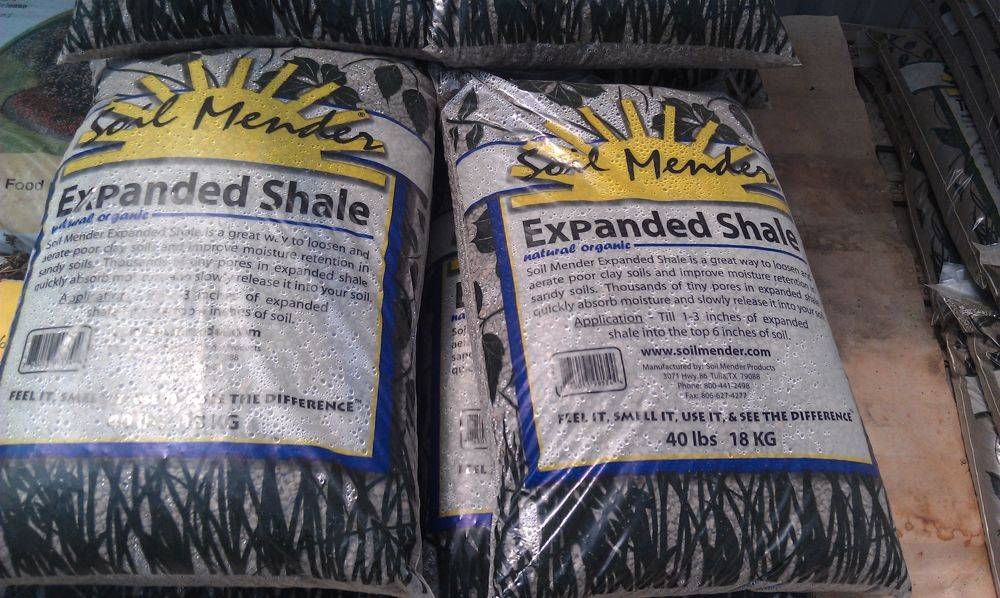
For a new bed, the recipe that works in North Texas (developed by Texas A&M AgriLife in Dallas) is a 3-inch layer of expanded shale plus 3 inches of compost, tilled into the top 6–8 inches of clay. Expanded shale is a fired, porous rock that permanently opens up the clay structure — unlike sand, which turns clay into concrete, and unlike compost alone, which breaks down in a couple of years. It is a one-time investment per bed. We sell it by the bag and by the yard, along with compost and bed mix.
Where drainage is truly bad — low spots, next to a slab — build a raised bed 8–12 inches above grade with a good bed mix, or plant on a slight mound so the crown of the plant sits above the surrounding soil.
The yellow-leaf problem (iron chlorosis)
Our clay runs alkaline, with a pH around 7.5–8.2. At that pH iron is present in the soil but chemically locked up, so acid-loving plants show yellow leaves with green veins on the newest growth: azaleas, gardenias, some hollies, sweetgum, pin oak, magnolias and roses are the usual victims. The fixes, in order:
- Choose plants that do not care: live oak, cedar elm, Chinese pistache, crape myrtle, hollies, nandina, salvias and Texas natives.
- For plants you already have, apply a chelated iron product (foliar spray works fastest) and a soil acidifier such as granular sulfur, and mulch with pine bark, which acidifies slowly as it breaks down.
- For azaleas and gardenias, plant in a raised bed of pure azalea/acid mix rather than fighting the native soil.
Mulch: the part everyone skips
Two to three inches of shredded hardwood or native mulch on every bed keeps clay from baking in summer, insulates roots in winter, stops most weeds, and slowly feeds the soil. Keep it an inch or two away from stems and trunks. Refresh it every spring and fall. Bagged or by the yard, this is the highest-value product in the nursery.
How much do you need?
A cubic yard of mulch covers about 100 square feet at 3 inches deep; a 2-cubic-foot bag covers about 8 square feet at the same depth. Use the mulch and soil calculator and we will load exactly that much.
Get a soil test
For a vegetable garden or a lawn that will not respond, a Texas A&M soil test costs a few dollars and tells you exactly what to add. Bring the results to the nursery and we will translate them into products.
Written by the Nursery Professionals at Landscape Source Nursery, 167 Ole West Lane, Rockwall. Questions? Call (469) 698-0037 or send us a note.