


Palm & tropical · North Texas care guide
Trachycarpus fortunei
Nursery Pro tip: The hardiest trunked palm for North Texas. Wrap the crown in a hard freeze.
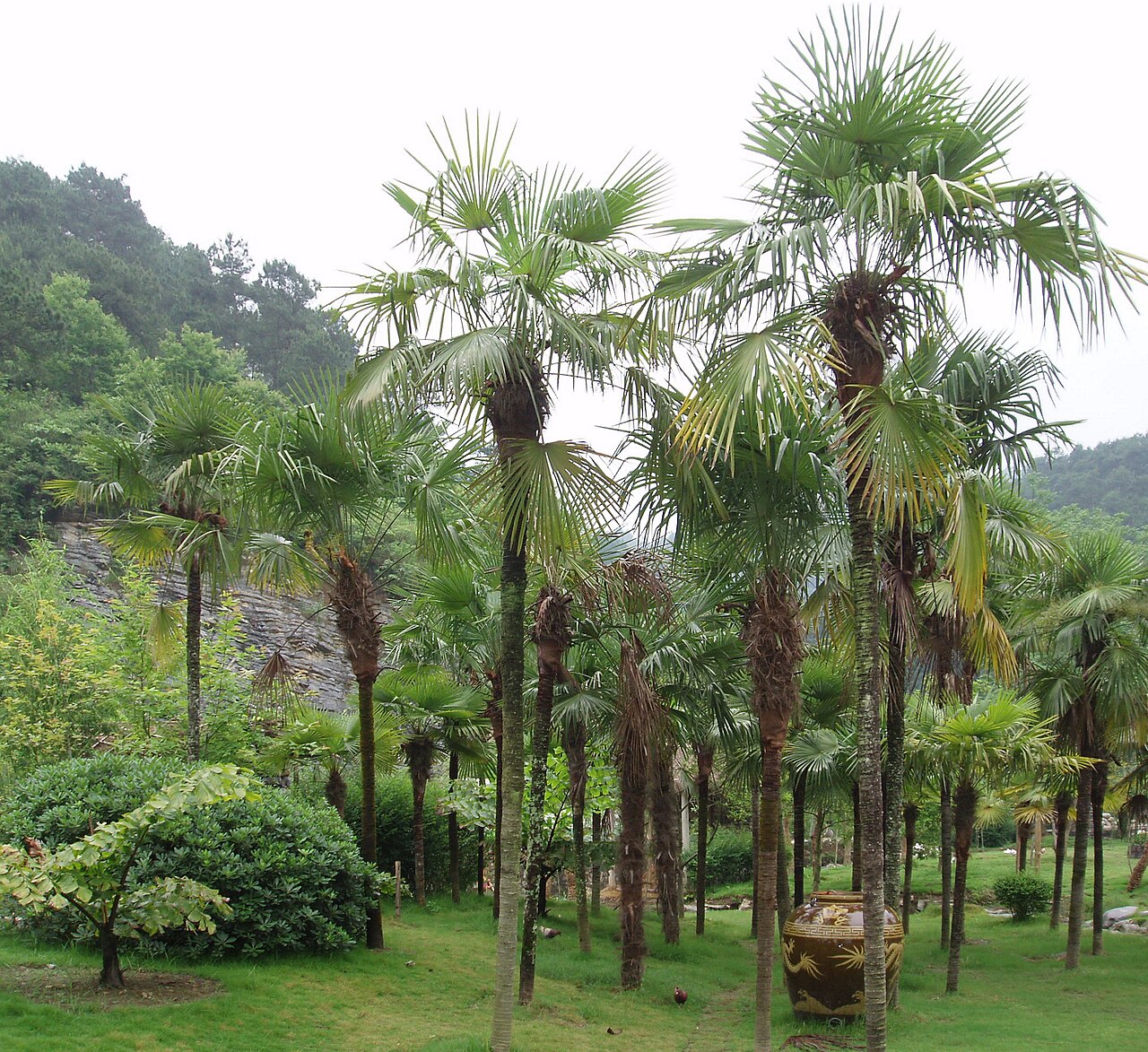
The most cold-hardy palm that looks like a real palm — fan fronds on a slender trunk wrapped in brown fiber, reaching 15–25 ft over many years. It handles our winters better than any other palm we sell, which is the whole reason to plant it.
Part shade to full sun; it actually prefers some afternoon shade here. Protected from the north wind — a courtyard or an east-facing wall. Good drainage. It stays narrow, so it fits tight spaces.
Spring only, so it has a full warm season to root before winter. Wide hole, ball at grade, native soil, Root Stimulator, 3 inches of mulch.
Twice a week the first summer, weekly after. It likes more water than desert palms.
Palm fertilizer with micronutrients in spring and midsummer; our soil leaves palms short on magnesium and manganese.
Cut brown fronds at the trunk, leaving an inch of stem. Never cut green fronds — a palm lives off them, and 'hurricane cutting' weakens it permanently. Leave the fiber on the trunk.
Frond burn in a severe freeze (it usually recovers; don't cut the spear out unless it pulls free and smells sour). Nutrient deficiencies showing as yellow or frizzled new growth. Root rot in wet clay.
Tropical-look beds and pool surrounds with sago palm, agave, canna and hardy hibiscus.
Written for Rockwall's black clay, heat and winters by the Landscape Source team. Every yard is different — bring a photo by, or ask LS-Ai, and we'll tailor it to your spot.