

Palm & tropical · North Texas care guide
Butia capitata
Nursery Pro tip: Blue-gray feather palm with edible 'jelly' fruit. Cold-hardy to the teens.
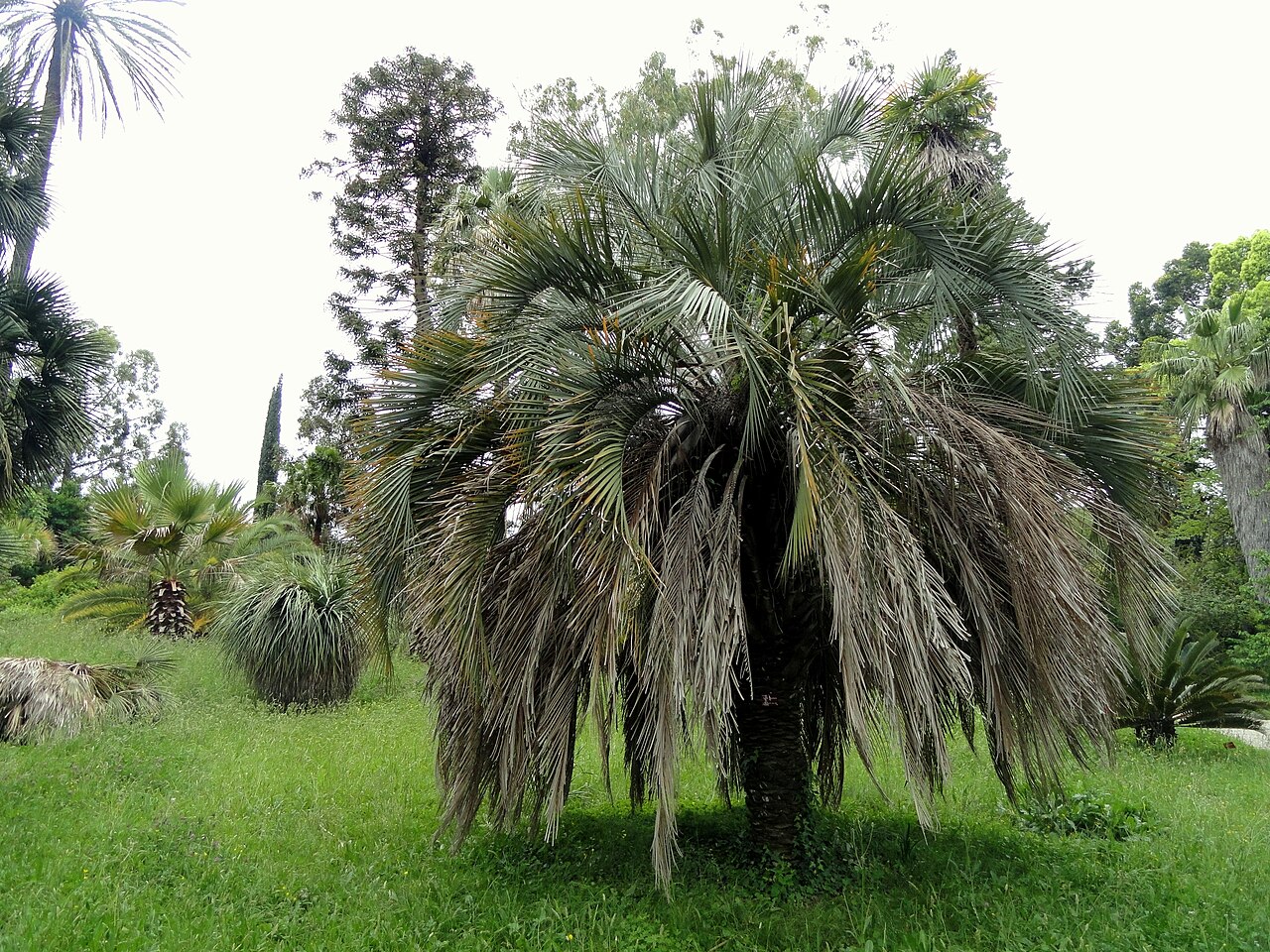
The blue-gray feather palm — arching, silvery fronds that curve toward the ground on a stout trunk, 12–18 ft over time. Cold-hardy for us, slow, and the edible orange fruit is where 'jelly palm' comes from.
Full sun and drainage; it's the most drought-tolerant palm we carry. Give it 10–15 ft of spread — the fronds arch much wider than people expect. Protected from north wind is a plus.
Spring. Wide hole, ball at grade, native soil with expanded shale in heavy clay, Root Stimulator, mulch off the trunk.
Weekly the first two summers, then every week or two. Do not keep it wet.
Palm fertilizer with magnesium and manganese in spring and midsummer.
Remove only fully brown fronds. The fruit drops and stains a patio or driveway, so cut the fruit stalks off in early summer if that matters, or plant it in a bed.
Cold damage in a severe freeze; nutrient deficiency on alkaline soil; root rot when overwatered. The frond bases have sharp spines — wear gloves.
A sunny focal point in a xeriscape or pool bed with agave, yucca, Gulf muhly and lantana.
Written for Rockwall's black clay, heat and winters by the Landscape Source team. Every yard is different — bring a photo by, or ask LS-Ai, and we'll tailor it to your spot.