


Palm & tropical · North Texas care guide
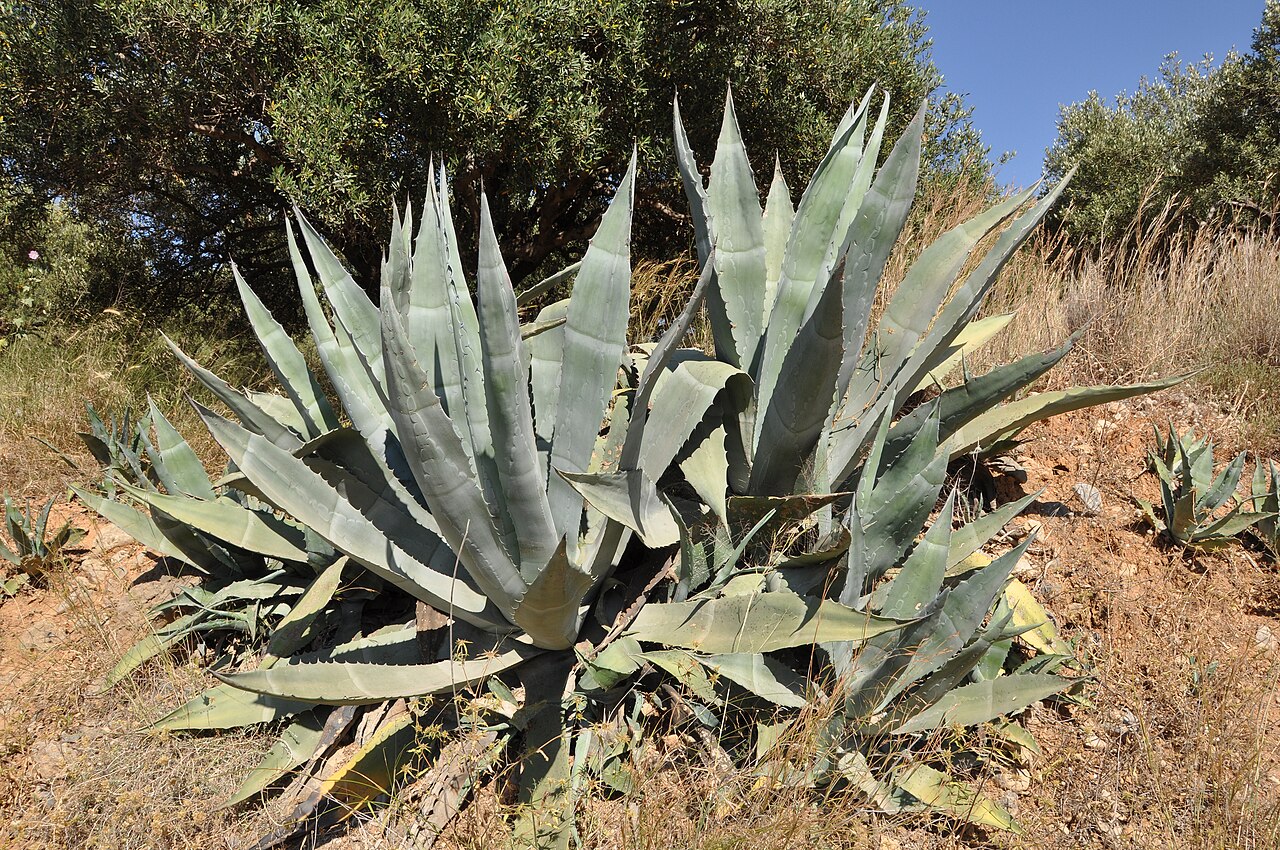
Agave spp.
Nursery Pro tip: Drainage is everything: mound it, add expanded shale, and never irrigate it. Pups can be dug and replanted anywhere.
Living sculpture — thick, rigid leaves in a perfect rosette, blue-gray, green or striped, holding their shape all year with no care whatsoever. Sizes run from a foot across to six feet depending on species; whale's tongue and 'Blue Glow' are favorites here.
Full sun and the sharpest drainage in the yard. Raised beds, slopes, gravel, or a pot. Never in an irrigated lawn bed. Keep the spined tips away from walkways and where children play.
Spring or fall. Plant high — the crown clearly above grade — in native soil heavily cut with expanded shale or decomposed granite. Gravel mulch only. Root Stimulator at planting, then hands off.
Weekly for the first month to root in, then a soak every three or four weeks in summer at most, none in winter.
Never.
Remove dead lower leaves at the base with a sharp knife. You can blunt the terminal spines with scissors near a path. Offsets (pups) can be dug and potted in spring.
Crown rot from water sitting in the rosette or a wet winter bed — the only real threat. Agave snout weevil can kill a large plant from the inside. Most species bloom once after many years and then die, leaving pups behind; that's normal.
Xeriscape and modern beds with yucca, Texas sage, blackfoot daisy, Gulf muhly and gravel mulch. Outstanding in a big pot by itself.
Written for Rockwall's black clay, heat and winters by the Landscape Source team. Every yard is different — bring a photo by, or ask LS-Ai, and we'll tailor it to your spot.