


Palm & tropical · North Texas care guide
Cycas revoluta
Nursery Pro tip: Not a true palm, and that's why it survives our winters. Slow, sculptural, tough.
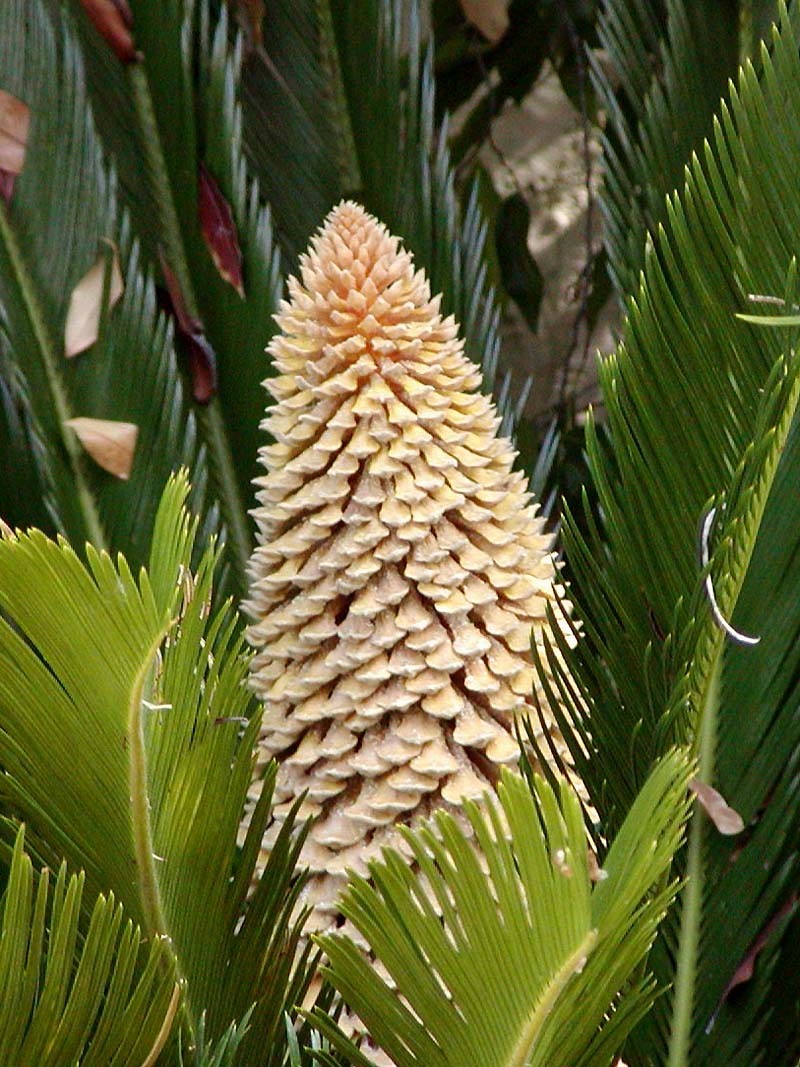
Not a palm at all but a cycad — a prehistoric plant with a stiff, symmetrical rosette of dark glossy fronds on a shaggy trunk. Extremely slow (one flush of new fronds a year) and long-lived, which is why a big one costs what it does.
Part shade to full sun with afternoon protection; the fronds burn in relentless west sun. Sharp drainage, always. Space 5 ft apart, or grow it in a heavy pot you can move to the garage for a hard freeze.
Spring. Plant high — the base of the trunk at or above grade, never buried — in native soil cut with expanded shale. Root Stimulator, gravel or thin mulch kept off the trunk.
Weekly through the warm season, sparingly in winter. Soggy soil rots the crown.
A palm or cycad fertilizer with magnesium and manganese in spring and midsummer. Yellow fronds usually mean a manganese deficiency, which is common in our alkaline soil.
Cut off only fully brown fronds, at the trunk. Leave yellow ones — the plant is still pulling nutrients from them. One tidy-up a year is plenty.
Every part of a sago is poisonous to dogs, and the seeds are the worst — a chewed seed can be fatal, so think twice with a puppy in the yard. Hard freezes burn the fronds (they regrow from the crown); scale on the leaf undersides responds to horticultural oil.
A courtyard or entry specimen, or in a large glazed pot flanking a door. With agave, yucca and Asian jasmine.
Written for Rockwall's black clay, heat and winters by the Landscape Source team. Every yard is different — bring a photo by, or ask LS-Ai, and we'll tailor it to your spot.