


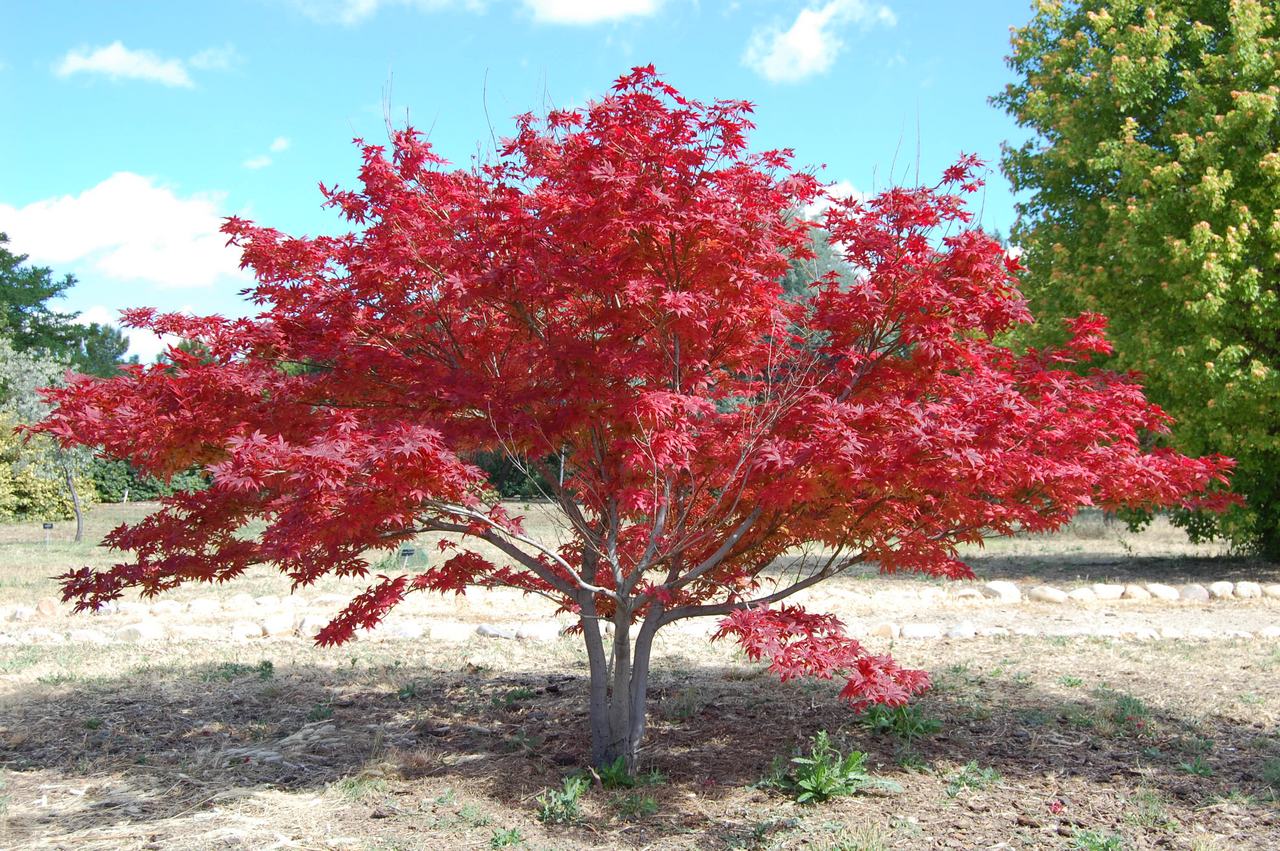
Tree · North Texas care guide
Acer palmatum
Nursery Pro tip: Morning sun, afternoon shade, and mulch — that's the whole secret in Rockwall. Plant on the north or east side and keep it off the west wall.
The most elegant small tree for a shaded courtyard: layered lace-like foliage in red, burgundy or green, brilliant fall color, and a sculptural winter silhouette. 10–20 ft, slow, and a long-term investment. 'Bloodgood' (upright, red) and 'Emperor 1' handle our heat best; dissectum types like 'Crimson Queen' and 'Tamukeyama' are weeping and need more shade.
Morning sun and afternoon shade — the east or north side of the house, or under high tree canopy. Full afternoon sun scorches the leaves by July. Wants a well-drained, compost-enriched bed, not wet clay; shelter from hot southwest wind.
Fall is best, spring is fine. Wide, shallow hole; ball 1–2 inches high; native soil blended with compost and expanded shale; Root Stimulator; 3 inches of mulch (its roots are shallow).
Consistent — twice a week in summer the first two years, weekly after that, deep and slow. Never let it dry out in August, but never let it sit in water either. Crispy leaf edges mean heat and thirst; brown mushy stems mean too wet.
Light feeding with an acid or tree fertilizer in early spring only. No summer fertilizer.
Late winter, lightly: remove dead twigs and crossing branches to show the structure. Never shear it.
Leaf scorch in afternoon sun (move it or shade it). Iron chlorosis in high pH — chelated iron in spring. Late-freeze damage to new leaves — cover it if a hard freeze follows an early warm spell.
Courtyards, entries and shade gardens with hosta, holly fern, coral bells, Japanese boxwood and mondo grass.
Written for Rockwall's black clay, heat and winters by the Landscape Source team. Every yard is different — bring a photo by, or ask LS-Ai, and we'll tailor it to your spot.