


Tree · North Texas care guide
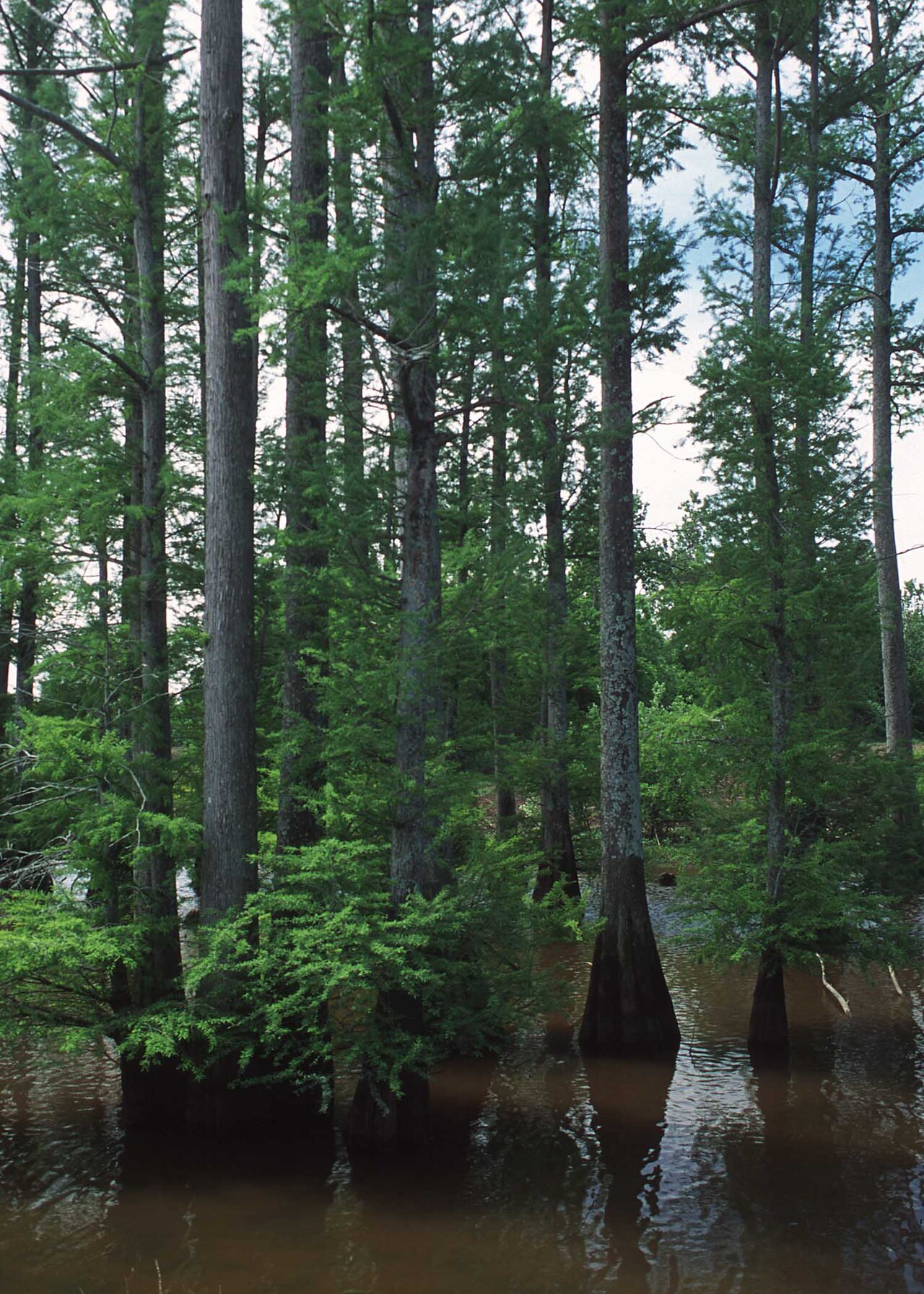
Taxodium distichum
Nursery Pro tip: Handles wet spots and dry ones. Feathery foliage, rust-orange in fall.
Feathery, soft-needled and deciduous — bright green in spring, rust-orange in late fall. Pyramidal when young, broad with age, and much faster than people expect. It's the tree in the swamps, but it grows just as well in a lawn.
Full sun. Loves moist spots (pond edges, low corners, the drainage swale) but tolerates ordinary lawn conditions. Avoid the driest, hottest bed against a west wall. Knees usually only appear in wet ground.
Fall or spring. Wide hole, ball at grade, native soil, Root Stimulator, mulch. Keep the mulch wide — the shallow roots appreciate it.
Loves water: twice a week the first two summers, weekly after that in the heat. Browning needles in August almost always mean thirst.
Spring tree fertilizer while young. Yellowing between veins on new growth means iron — treat with chelated iron and soil sulfur; our high pH is the one thing it dislikes.
Rarely needed. Remove lower limbs in winter as it grows if you want to walk under it. Keep a single leader.
Iron chlorosis in high-pH soil (treat it early in spring). Bagworms in June — pick them off or spray with Bt while they're small. Spider mites in a hot dry summer; a hard spray of water helps.
Screen a back fence with a row 15 ft apart, or use as a focal tree by water. Pairs with Louisiana iris, canna and hardy hibiscus in a wet bed.
Written for Rockwall's black clay, heat and winters by the Landscape Source team. Every yard is different — bring a photo by, or ask LS-Ai, and we'll tailor it to your spot.