


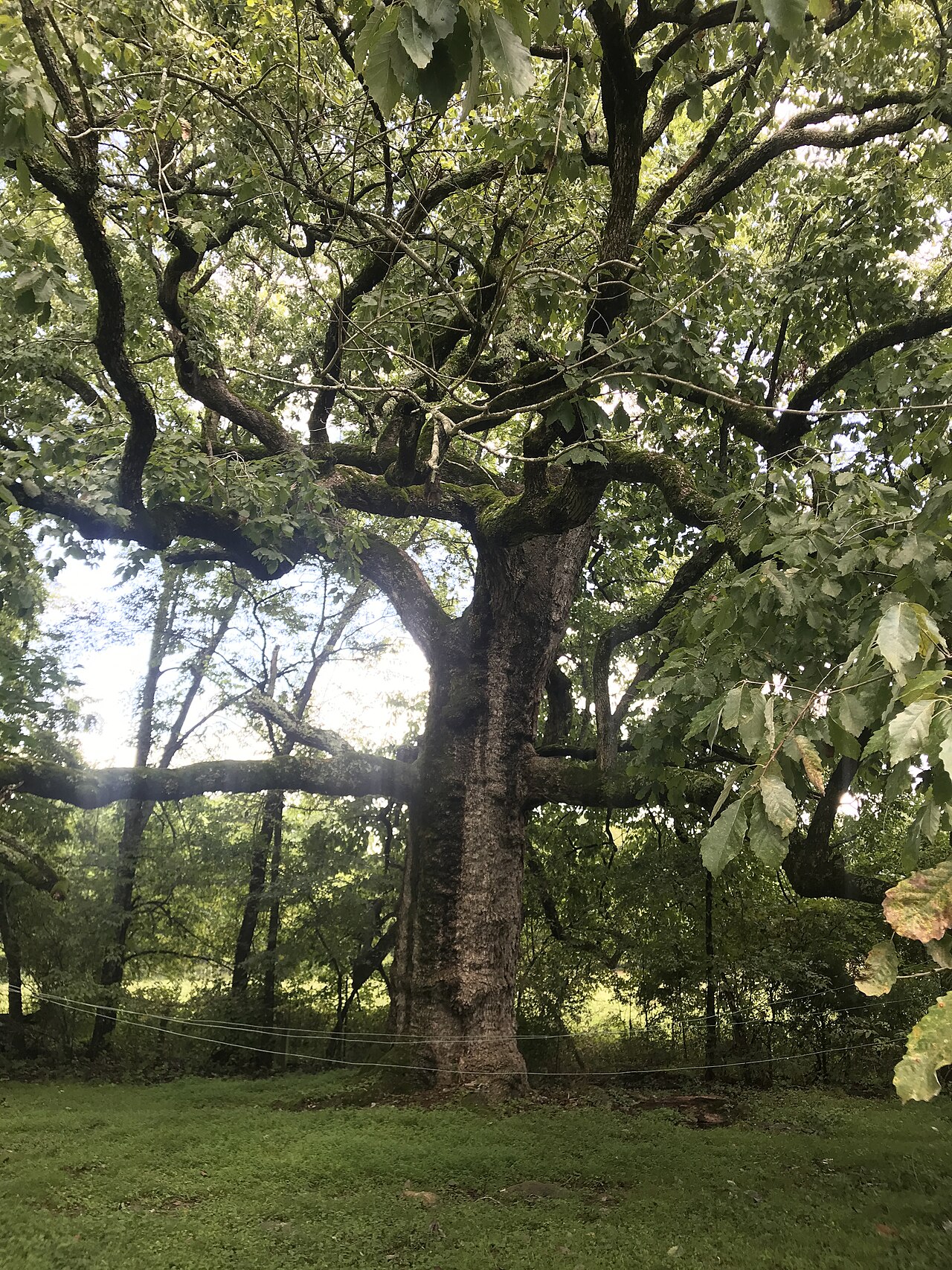
Tree · North Texas care guide
Quercus muehlenbergii
Nursery Pro tip: Loves our alkaline black clay. Underrated, tough, beautiful bark.
A tough Texas native oak with serrated, chestnut-like leaves that turn yellow to bronze in fall. Medium-fast, rounded canopy, and it actually prefers limestone and alkaline soil — it's growing wild on the hills around Lake Ray Hubbard.
Full sun; any drainage from clay to caliche. Give it 40–60 ft of eventual spread. Excellent on rocky or high-pH sites where other trees chlorose.
Fall through early spring. Standard tree planting: wide hole, ball no deeper than grade, native backfill, Root Stimulator, wide mulch ring off the trunk.
Weekly deep soak the first two summers, then largely on its own. Drought tolerant once established but grows faster with an occasional summer soaking.
Spring tree fertilizer for the first two or three years; nothing after that.
Dormant season (December–early February) only, and paint cuts — it's an oak. Very little needed beyond removing low or crossing limbs.
Almost none. Oak wilt is possible but less common in the white-oak group; still prune in winter. Rarely bothered by insects.
Great alternative to live oak where you want winter sun on the house. Pairs well with Mexican plum or redbud at the edge of its shade.
Written for Rockwall's black clay, heat and winters by the Landscape Source team. Every yard is different — bring a photo by, or ask LS-Ai, and we'll tailor it to your spot.