


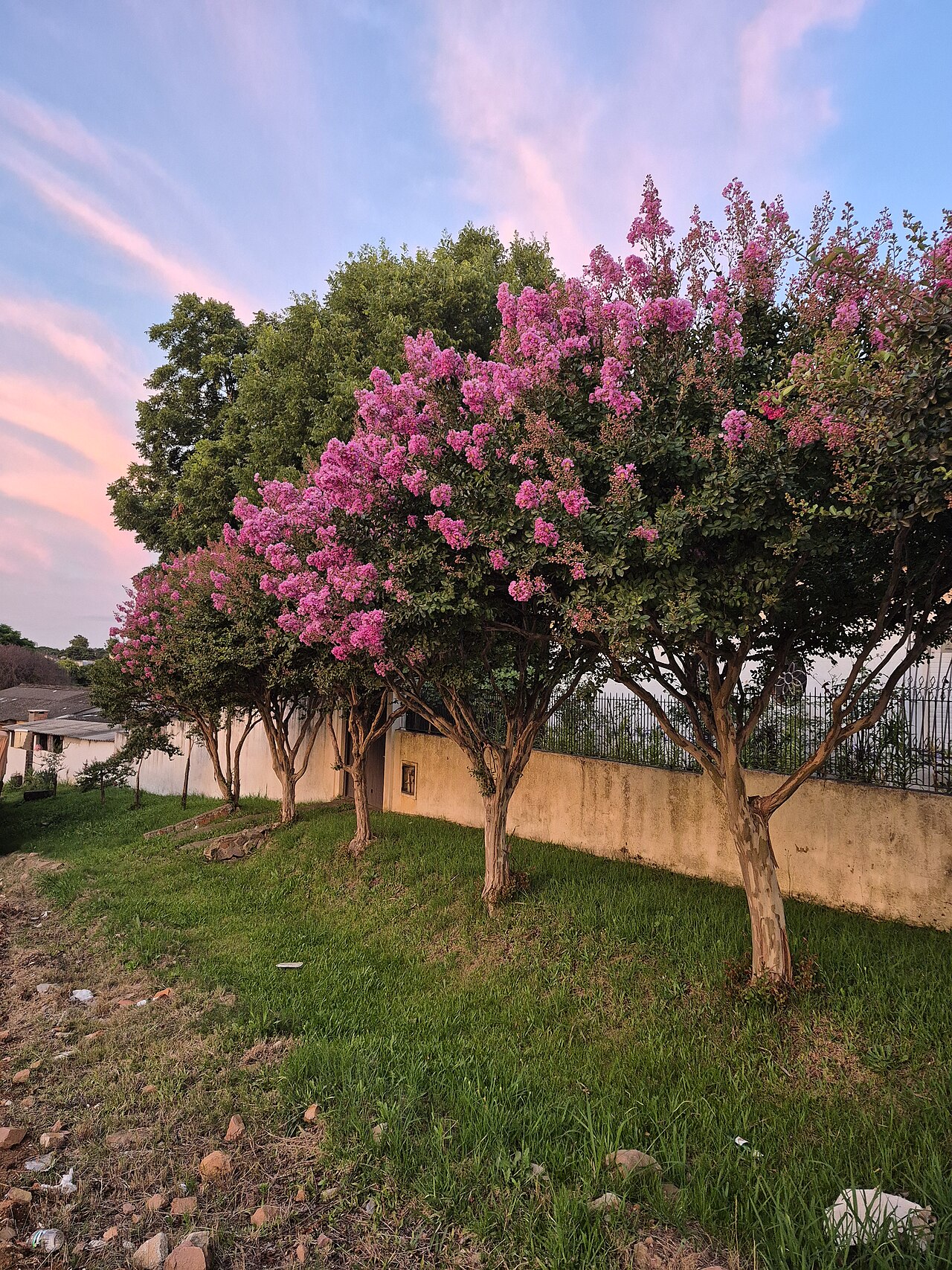
Tree · North Texas care guide
Lagerstroemia indica
Nursery Pro tip: Blooms all summer. Please don't top them — pick the right size variety instead.
A hundred days of bloom in the hottest part of the year, cinnamon bark in winter and orange-red fall color — the workhorse flowering tree of the South. Sizes range from 3-ft dwarfs to 25-ft trees, so match the variety to the space instead of pruning it down every year.
Full sun, at least six hours — shade means mildew and few flowers. Any soil that drains. Plant the right mature size for the spot: 'Natchez' (white, 25 ft), 'Muskogee' (lavender, 20 ft), 'Tuscarora' (coral, 20 ft), 'Dynamite' (red, 15 ft), 'Tonto' (fuchsia, 10 ft) are common here.
Spring through fall; container plants transplant easily. Wide hole, top of ball at grade, native soil, Root Stimulator, mulch.
Weekly deep soak the first summer; then drought tolerant, though it blooms longer with a soak every couple of weeks in July and August.
Light feeding in early spring; too much nitrogen gives leaves instead of flowers. Bloom Start or a bloom fertilizer in June extends the show.
Late winter (February). Remove suckers, crossing branches and seed heads if you like — but don't top it ("crape murder"): stubs make weak, whippy growth and fewer flowers. Limb up to show off the trunks. Deadheading in July often brings a second flush.
Aphids and the sooty mold that follows them (hose or insecticidal soap). Powdery mildew in shade or crowded spots (choose resistant varieties — anything with a Native American tribe name). Crape myrtle bark scale: white felt on the trunks — treat with a systemic in spring.
Along a driveway, as a patio tree, or in a row for a summer screen. Underplant with lantana, Gulf muhly, dwarf yaupon or Asian jasmine.
Written for Rockwall's black clay, heat and winters by the Landscape Source team. Every yard is different — bring a photo by, or ask LS-Ai, and we'll tailor it to your spot.