

Fruit & edible · North Texas care guide
Carya illinoinensis
Nursery Pro tip: The Texas state tree. Plant two varieties for nuts and give it lots of room.
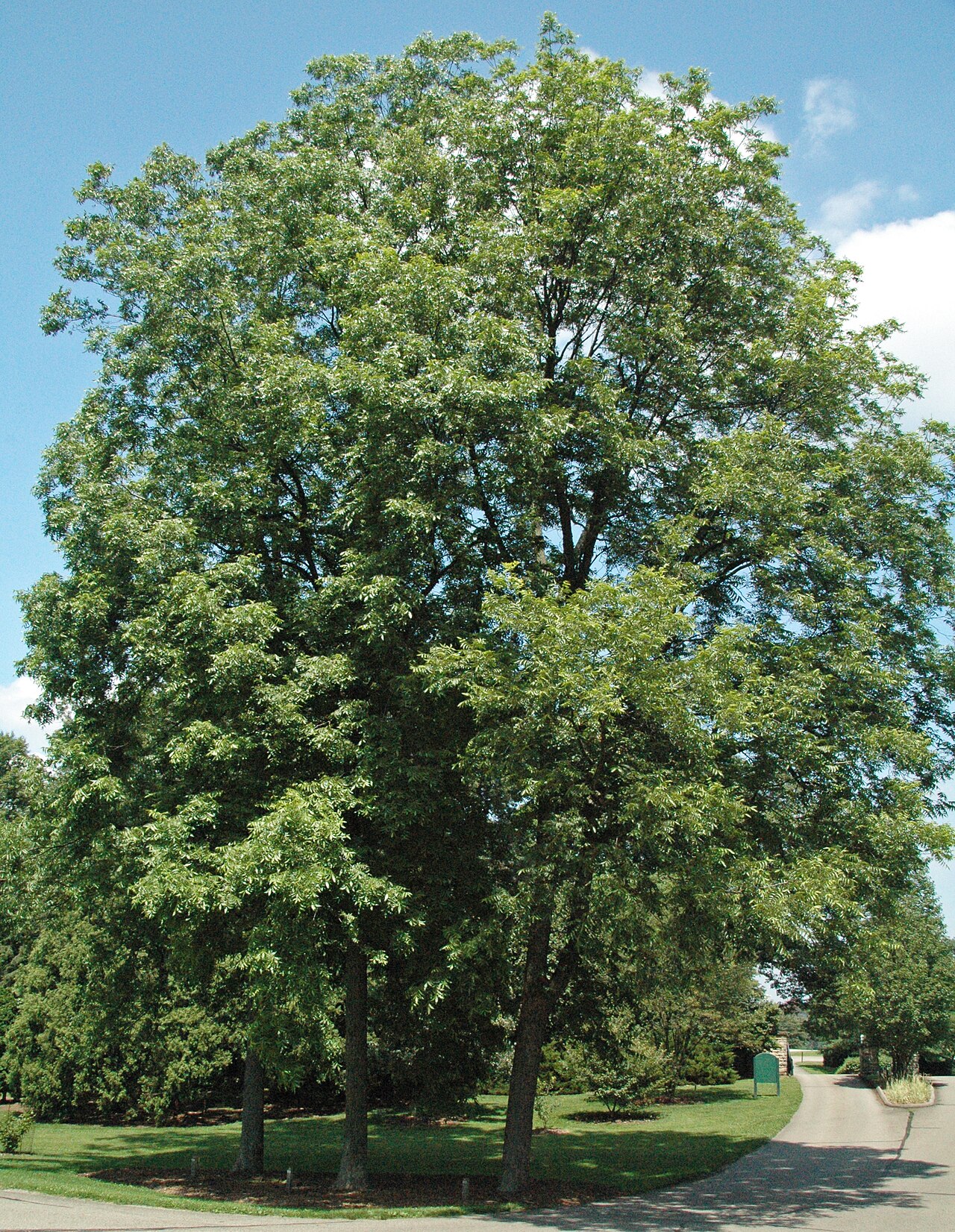
The Texas state tree — a magnificent 60–80 ft shade tree that happens to drop nuts. Think of it as a shade tree first: it takes decades to bear well, needs serious room, and a mature one shades half a yard. 'Pawnee' and 'Kanza' bear younger and smaller; 'Caddo' and 'Desirable' are the big ones.
Full sun and deep soil, 40–50 ft from the house and away from driveways and pools — pecans drop nuts, twigs and aphid honeydew. For good nut set you want two varieties that shed pollen at different times; a single tree produces, but lightly.
Dormant season, December through February. Pecans grow a deep taproot, so plant a container tree young rather than trying to move a big one. Wide hole, flare at grade, native soil, Root Stimulator, wide mulch ring.
Deep and regular — a pecan needs real water, especially July through September when the nuts fill. This is the difference between full kernels and shriveled ones.
Nitrogen in late winter and zinc, which our alkaline soil ties up; zinc sprays on new growth in spring are standard practice for pecans here.
Winter. Train one central leader with well-spaced scaffolds while it's young — that structure prevents the limb failures older pecans are famous for. Mature trees need little beyond deadwood removal.
Pecan scab in wet years (spotted nuts and leaves), aphids dripping honeydew onto whatever is parked beneath, webworms in late summer, and alternate bearing — a heavy crop one year and almost none the next is normal. Squirrels will take the whole crop if they're determined.
A shade tree for a big lot or the back of the property. Nothing grows well directly beneath one; keep a mulched ring.
Written for Rockwall's black clay, heat and winters by the Landscape Source team. Every yard is different — bring a photo by, or ask LS-Ai, and we'll tailor it to your spot.