


Fruit & edible · North Texas care guide
Ficus carica
Nursery Pro tip: Celeste and Brown Turkey are the proven ones here. Nearly no pests, tons of fruit.
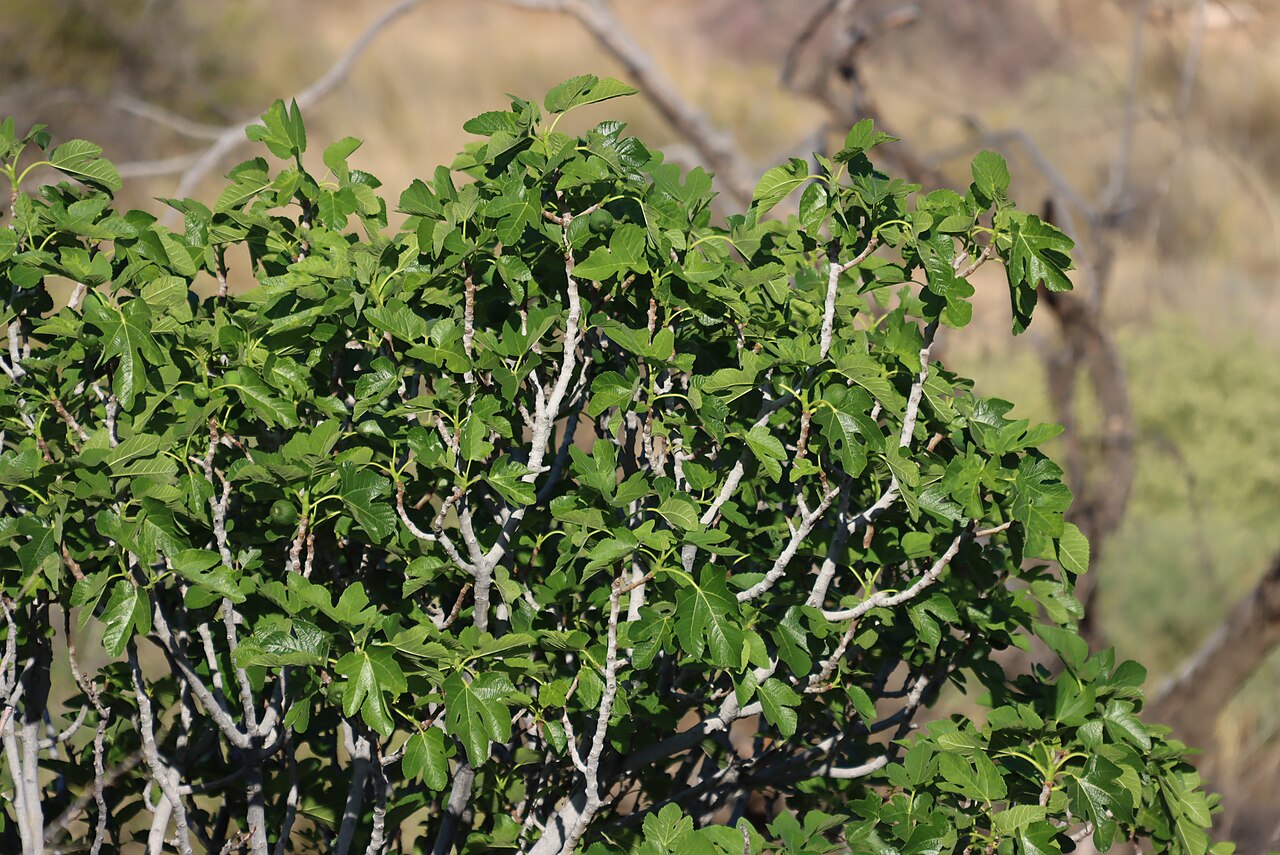
The easiest fruit tree in North Texas by a wide margin: no spraying, no pollinator needed, and a heavy crop of sweet figs in summer on a handsome multi-trunk 10–15 ft shrub-tree. 'Celeste' and 'Texas Everbearing' (Brown Turkey) are the dependable ones here.
Full sun, ideally against a south or west wall where the reflected heat ripens fruit and the building buffers a hard freeze. Any soil that drains; figs are not fussy. Give it 10–15 ft of spread.
Spring is safest here, so it establishes before winter. Wide hole, root flare at grade, native soil, Root Stimulator, and a deep mulch ring — figs have shallow roots that love mulch.
Deep weekly watering in summer, more while fruit is sizing. Irregular water causes fruit to split or drop, which is the most common fig complaint.
Light feeding in early spring; figs fruit better on lean soil than on rich. Skip nitrogen if you're getting lush growth and few figs.
Late winter, and lightly — most of the crop comes on last year's wood, so hard pruning costs you fruit. Remove dead and crossing limbs, keep three to five trunks, and head it back to a height you can pick from. Root suckers come up freely; cut them out or let one replace an old trunk.
A hard freeze can kill it to the ground; it regrows from the roots and fruits again in a year or two, which is why the wall matters. Birds are the real competition — netting is the only reliable answer. Wear sleeves: the sap irritates skin.
A sunny corner or along a fence. Beautiful large leaves make it an ornamental in its own right.
Written for Rockwall's black clay, heat and winters by the Landscape Source team. Every yard is different — bring a photo by, or ask LS-Ai, and we'll tailor it to your spot.