

Fruit & edible · North Texas care guide
Malus domestica
Nursery Pro tip: Gala, Fuji and Anna do well in North Texas. Plant two for pollination.
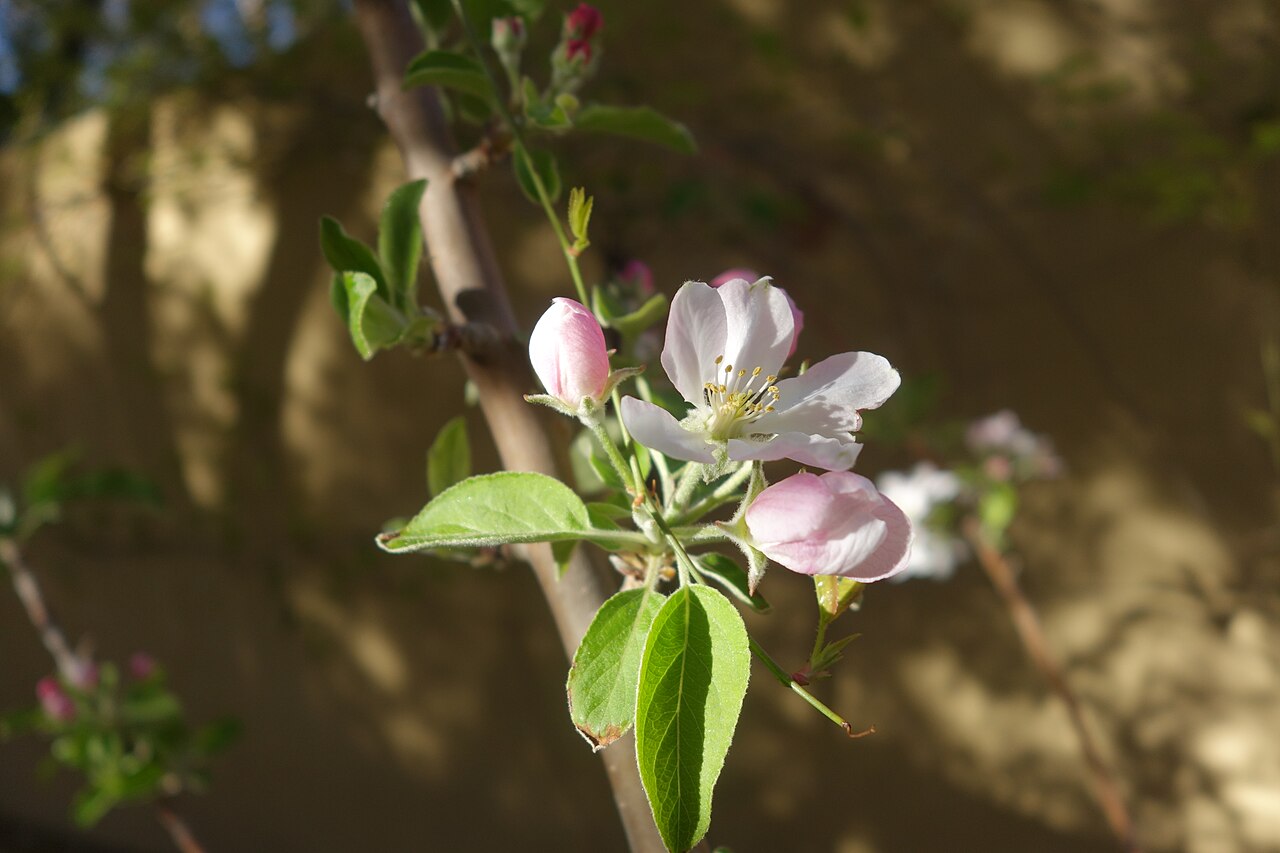
Spring blossom, summer shade and fall fruit on a 12–20 ft tree. Apples do grow here with the right varieties — low-chill types like 'Anna', 'Dorsett Golden' and 'Gala' — but count on two different varieties for cross-pollination, and expect to spray if you want unblemished fruit.
Full sun, eight hours, with air movement. Well-drained soil; apples hate wet feet. Plant two compatible varieties within 50 ft of each other, or one multi-grafted tree.
Dormant season, December through February. Wide hole, no fertilizer in the hole, graft union kept 2–3 in above the soil line, native soil, Root Stimulator, wide mulch ring off the trunk.
Deep weekly soakings through summer, steady while the fruit is sizing. Drought in June means small apples.
A balanced fertilizer in late winter for the first years. Go easy — soft growth invites fire blight.
Late winter, to a central leader with tiered scaffold branches (different from the open vase used for peaches). Apples fruit on short spurs that live for years, so don't shear off the spur wood. Thin young fruit in May to one per cluster for size and to reduce alternate bearing.
Fire blight — shoots that look scorched and curl into a shepherd's crook; cut them out 12 in below the damage in dry weather and disinfect the pruners between cuts. Codling moth (the worm in the apple), cedar-apple rust if cedars are nearby, and aphids. Dormant oil in winter helps with several at once.
A small home orchard with peach, fig and pomegranate. Keep a clean mulched ring, not turf, beneath.
Written for Rockwall's black clay, heat and winters by the Landscape Source team. Every yard is different — bring a photo by, or ask LS-Ai, and we'll tailor it to your spot.