


Perennial · North Texas care guide
Lantana camara & montevidensis
Nursery Pro tip: The butterfly plant. Blooms through 105° without complaint. New Gold and Dallas Red are proven.
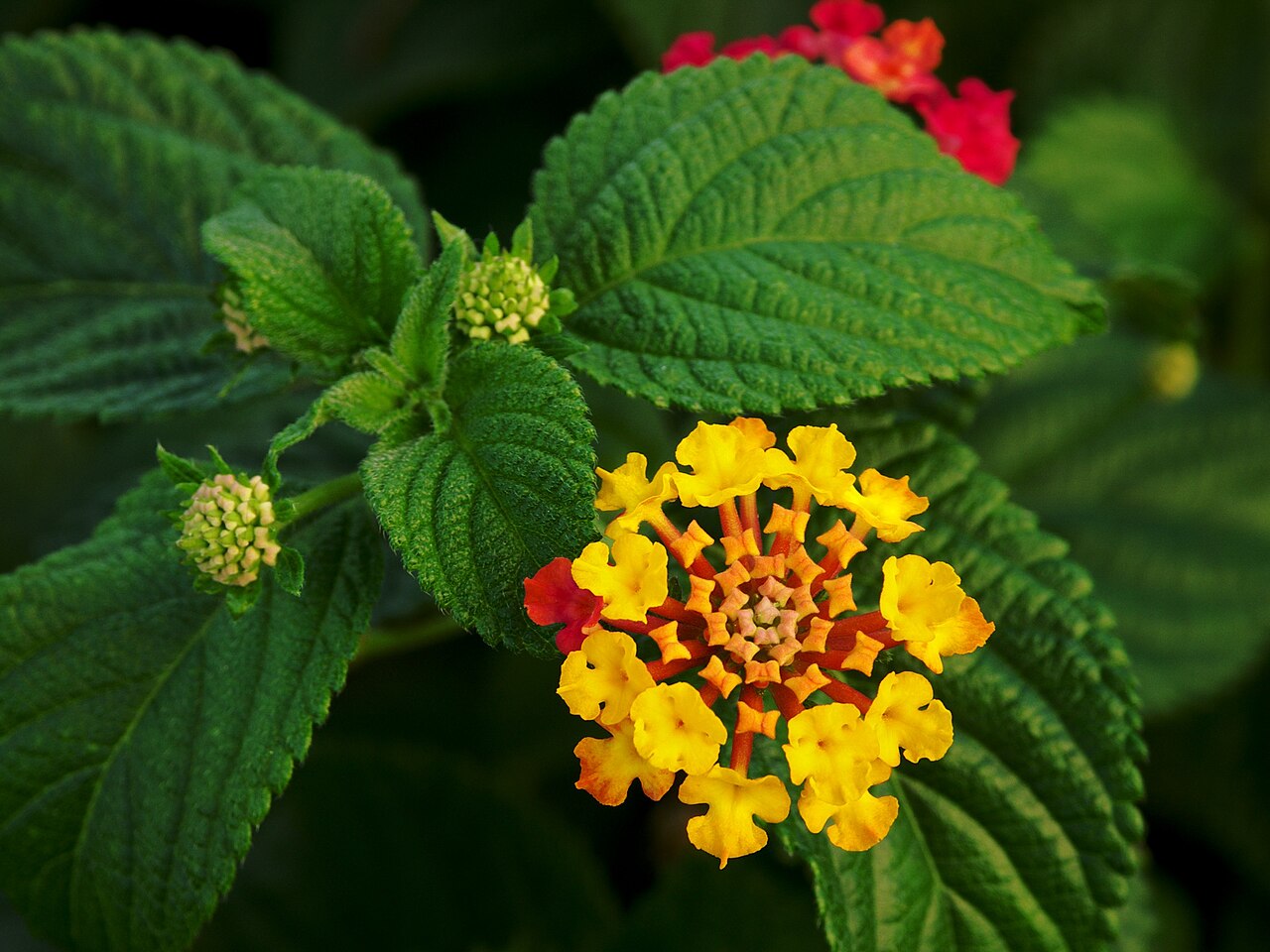
Clusters of orange, yellow, pink, purple or white flowers from May until frost on a plant that thrives on heat, drought and neglect — and is covered in butterflies the entire time. Spreading types like 'New Gold' and trailing purple make groundcovers; upright varieties reach 3 ft.
Full sun — it will not bloom in shade — and any drained soil. Space 2–3 ft apart. Ideal in hot parking-strip beds and big pots.
Spring, once the soil is warm (mid-April on). Hole twice the pot width, ball at grade, native soil, Root Stimulator, mulch.
Weekly to establish, then every week or two. Overwatering means leaves and no flowers.
Almost none. A light spring feeding is plenty.
Shear spent flowers and seed berries through the season to keep it blooming. Leave the dead top growth over winter for crown protection, then cut it to 4–6 in in late February. It leafs out very late — often not until May — so don't dig it up in April.
Lace bugs cause silvery, stippled leaves in late summer; treat or simply shear and let it regrow. The green berries are mildly toxic if eaten. Some varieties are root-hardy here, some are not — treat the trailing purple as the toughest.
The backbone of a hot sunny bed with autumn sage, blackfoot daisy, Gulf muhly, vitex and Texas sage.
Written for Rockwall's black clay, heat and winters by the Landscape Source team. Every yard is different — bring a photo by, or ask LS-Ai, and we'll tailor it to your spot.