

Shrub · North Texas care guide
Viburnum obovatum
Nursery Pro tip: A native evergreen screen that feeds early bees and takes wet or dry clay. Dense enough to hide a fence in three years.
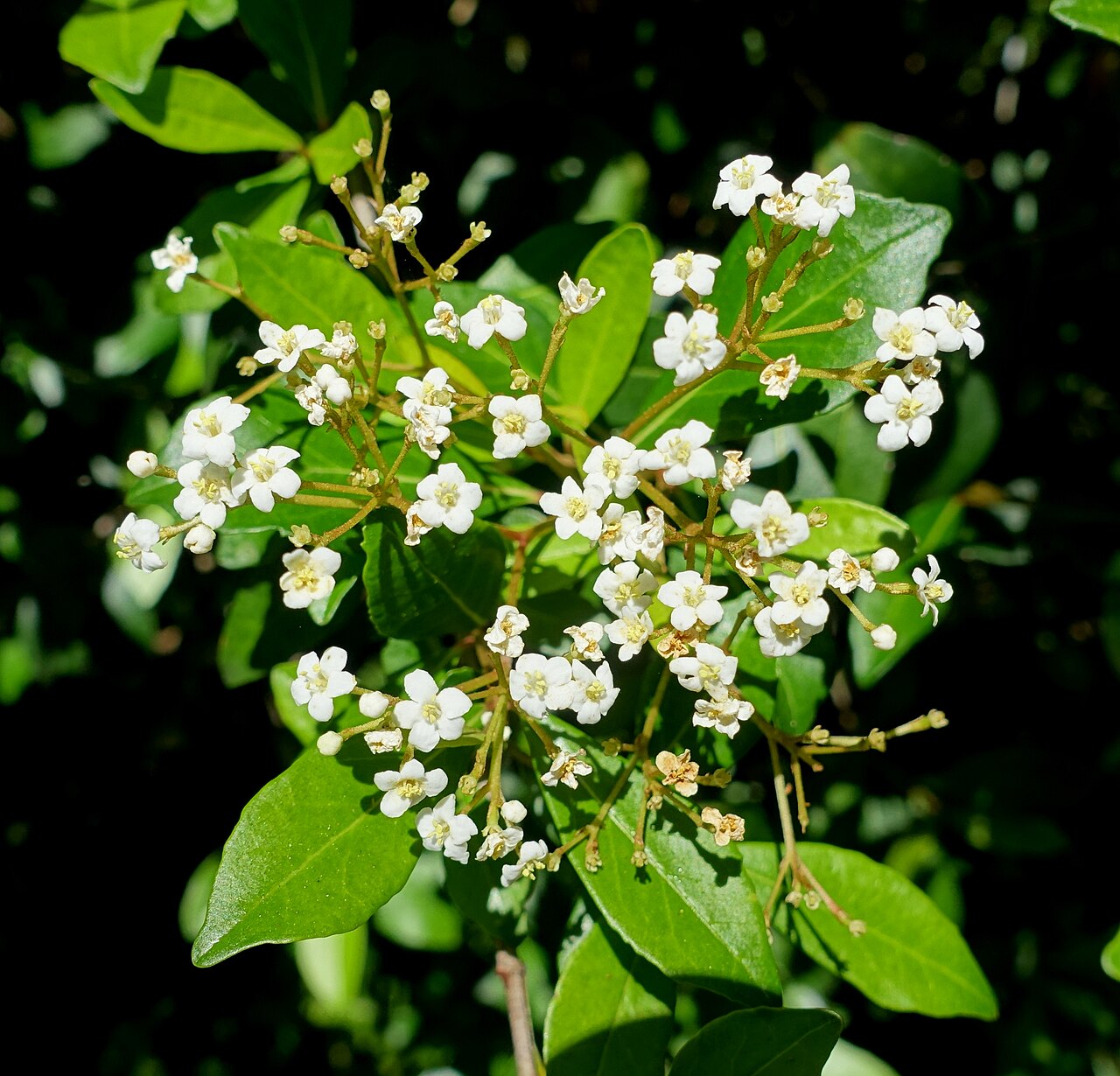
A fine-textured native evergreen covered in flat white flower clusters in early spring, followed by red berries that turn black and feed the birds. Grows 8–12 ft naturally; 'Whorled Class' and dwarf forms stay smaller. It clips into a beautiful fine hedge.
Full sun to part shade; happy in moist soil and tolerant of dry once established. Any reasonable drainage. Space 4 ft apart for a hedge.
Fall or spring. Hole twice the pot width, ball at grade, native soil, Root Stimulator, mulch.
Twice a week the first month, weekly the first summer, then every week or two.
Light spring feeding; it isn't fussy.
Right after bloom. Shears beautifully into a formal hedge, or leave it natural and airy. Pruning in winter removes the spring flowers.
Very few problems — no leaf spot the way photinia has, which is why we recommend it. It does sucker at the base; pull or cut the suckers if you want a clean trunk line.
Fine-textured hedge, native bed with yaupon, wax myrtle and Turk's cap, or a pollinator planting — the early flowers are one of the first food sources of the year.
Written for Rockwall's black clay, heat and winters by the Landscape Source team. Every yard is different — bring a photo by, or ask LS-Ai, and we'll tailor it to your spot.