


Shrub · North Texas care guide
Photinia × fraseri
Nursery Pro tip: Classic fast screen with red new growth. Keep it in full sun with air flow.
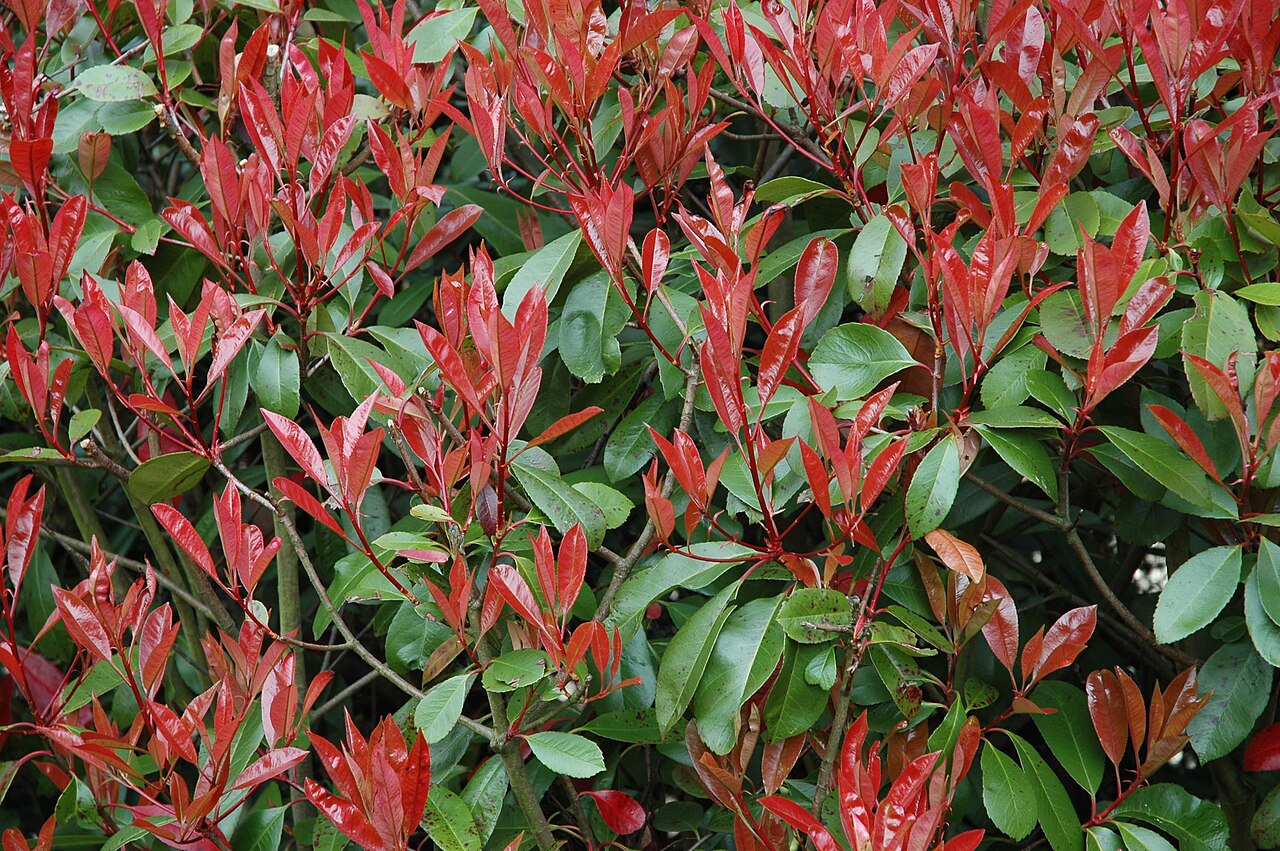
The famous red-new-growth hedge of the 1980s — brilliant scarlet flushes on a fast 10–15 ft evergreen. We still sell it because people want it and it's beautiful when it's healthy, but be honest with yourself about leaf spot before you plant a whole row.
Full sun and, above all, air circulation and space. Crowded rows, overhead sprinklers and shade are what bring on the disease. Space at least 5–6 ft apart, and consider mixing in Nellie Stevens holly or wax myrtle so one disease can't take out the whole screen.
Fall or spring. Hole twice the pot width, ball at grade, native soil, Root Stimulator, mulch.
At the base only, weekly the first summer, then occasionally. Never water the foliage.
Spring shrub fertilizer. Don't over-fertilize — soft red growth is the most susceptible to leaf spot.
Late winter, and lightly. Every shearing forces the tender new growth that the fungus attacks, so resist the urge to trim it constantly. Rake up and remove fallen leaves.
Entomosporium leaf spot: red-purple spots that spread, defoliate and can kill an established hedge. Keep the leaves dry, prune for airflow, clean up litter, and spray a fungicide during wet springs if you're committed to it.
If you want the red flush with less risk, we'd steer you to Nellie R. Stevens holly, cleyera or Walter's viburnum for the screen and a single photinia as an accent.
Written for Rockwall's black clay, heat and winters by the Landscape Source team. Every yard is different — bring a photo by, or ask LS-Ai, and we'll tailor it to your spot.