


Annual / color · North Texas care guide
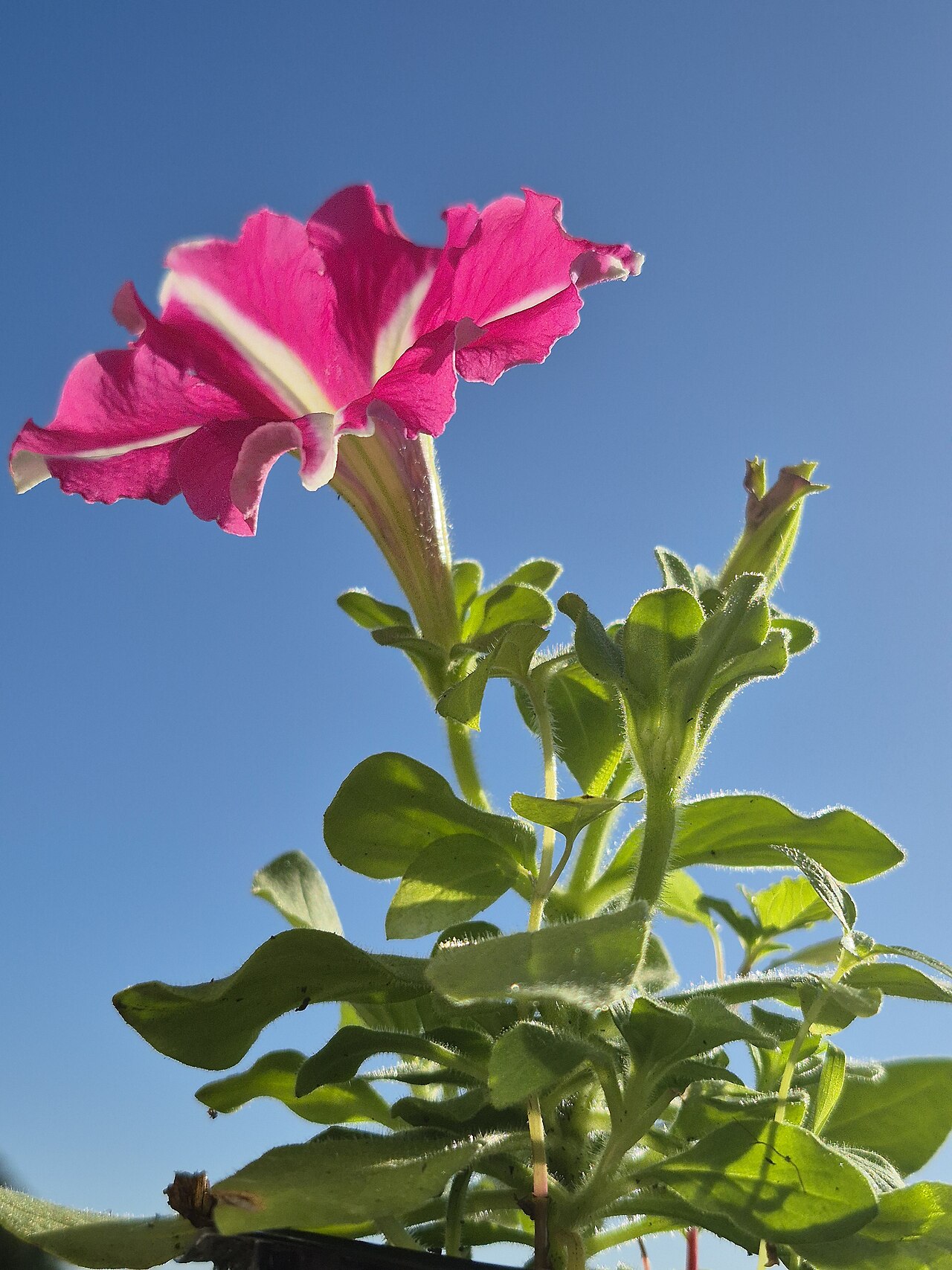
Petunia hybrids
Nursery Pro tip: Wave and Supertunia spread and never need deadheading. Plant after the last frost.
Trumpets of color in every shade, from spring into early summer and again in fall. Modern spreading types — Wave, Supertunia and the like — are far more heat-durable than the old bedding petunias and keep going much longer into our summer.
Full sun, six hours or more. Well-drained bed with compost, or a container with good potting mix. Space 12 in apart in beds; one plant fills a 14-in basket.
Mid-March through April, after the last freeze, so they get established before heat. A second planting in September gives a good fall show. Root Stimulator at planting, light mulch.
Two or three times a week in beds; hanging baskets need water daily in summer. They wilt hard and recover, but repeated wilting costs you flowers.
Steady feeding is the whole game with petunias — a water-soluble fertilizer every two weeks, or slow-release at planting plus liquid feeds. Pale leaves and thin bloom mean hungry.
When they get leggy in June, shear the whole planting back by a third and feed — they come back full in two weeks. Deadhead the older varieties; spreading types are self-cleaning.
Budworm — small caterpillars that bore into the buds so nothing opens; treat with Bt or spinosad. They stall in the deep heat of August. Root rot in a poorly drained bed.
Baskets and pots with sweet potato vine, or massed in beds with salvia and marigolds.
Written for Rockwall's black clay, heat and winters by the Landscape Source team. Every yard is different — bring a photo by, or ask LS-Ai, and we'll tailor it to your spot.