


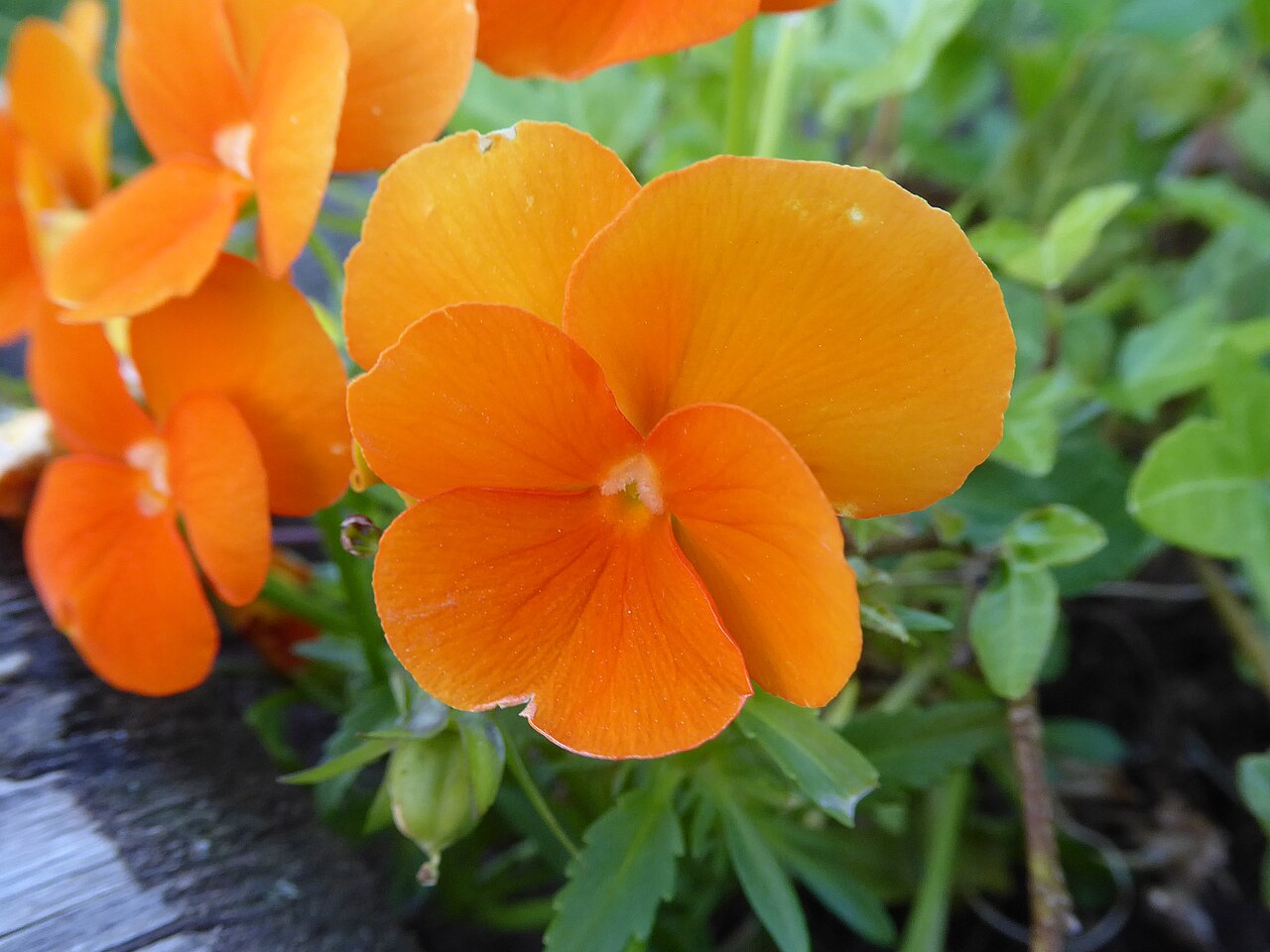
Annual / color · North Texas care guide
Viola × wittrockiana
Nursery Pro tip: Plant in October, enjoy through April. Feed monthly and they won't quit.
The backbone of winter color in North Texas — big cheerful faces in every color, blooming from October right through to May, shrugging off freezes that flatten everything else. Plant them in fall, not spring; they hate heat and quit in June.
Full sun to part shade (six hours of winter sun keeps them blooming). Well-drained bed with compost worked in. Space 8–10 in apart, or plant them tight at 6 in for an instant carpet.
Mid-October through November is the window — plant early enough that roots get going before the cold, and remember they'll take a hard freeze in stride. Work compost into the bed, plant at the same depth, water in with Root Stimulator, and mulch lightly.
Weekly through the cool months whenever we go dry — a common mistake is not watering winter beds at all. Check after a freeze; frozen ground means thirsty plants.
This is what separates a good pansy bed from a great one: they need nitrogen in cold soil. Feed at planting and then every three or four weeks all winter with a water-soluble fertilizer. Pale, stalled pansies in January are almost always hungry.
Pinch off the spent flowers (and the seed pods behind them) every week or two — deadheaded pansies bloom twice as heavily. Pull them in May when they stretch and fade.
They flop after a hard freeze and stand back up when it warms — don't panic. Slugs and pill bugs on young plants; aphids in a mild winter. Crown rot in a poorly drained bed.
Winter beds and pots with violas, ornamental kale and cabbage, dianthus and snapdragons; under nandina and hollies for the red-berry contrast.
Written for Rockwall's black clay, heat and winters by the Landscape Source team. Every yard is different — bring a photo by, or ask LS-Ai, and we'll tailor it to your spot.